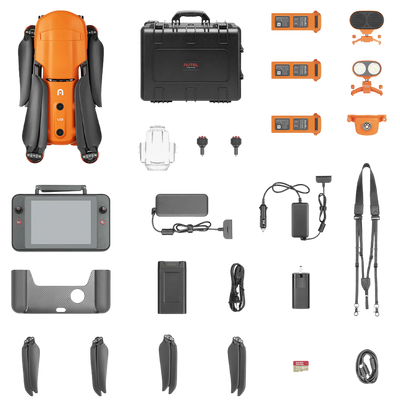
Short version: public safety agencies use drones to see a scene before they commit people to it. From overwatch at an incident to drone-as-first-responder programs, the value is faster, safer information. The two things that usually decide your buy are the thermal payload and, for many agencies, NDAA compliance.
How agencies use drones
- Situational awareness. A drone overhead gives incident command a live picture of a scene, a crowd, or a perimeter without exposing officers.
- Drone as first responder (DFR). A drone launches on a call and arrives before ground units, streaming video so responders know what they are walking into.
- Search and rescue. Thermal cameras find people in darkness, treeline, or water far faster than a ground search.
- Fire. Thermal mapping locates hot spots, tracks fire spread, and checks structures.
- Crash and scene mapping. Photogrammetry reconstructs a scene quickly so a road or area can reopen sooner.
What matters when you buy
The payload usually matters more than the airframe. A radiometric thermal camera paired with a strong zoom is the core tool for most public-safety work, so start there. Our thermal drone guide explains what the sensor specs mean. Beyond the camera, reliability and fast deployment win, because a public-safety drone has to work the moment it is needed.
The compliance question agencies cannot skip
Public-safety programs are often funded partly with federal grant money, and that can trigger NDAA procurement restrictions. If any of your funding is federal, you may need an NDAA-compliant or Blue UAS platform rather than a consumer brand. This is a budgeting and eligibility question, not a performance one, and it is best settled before you choose hardware. Our NDAA and Blue UAS guide explains who is affected, and you can see compliant options in our NDAA-compliant collection.
Building a program that scales
Most agencies start inside the standard FAA rules and grow from there. Night operations, flights beyond visual line of sight for DFR, and flights over people are common goals that require FAA waivers, which you earn by showing you can operate safely. Our Part 107 guide covers the certificate and the waiver path. Plan the program, not just the purchase, and the hardware choice gets easier.
How Scanixx helps
Tell us your mission and your funding source and we will match a platform and thermal payload that clears your requirement. Browse our thermal and public-safety drones or request a quote.
This guide is general information. Procurement rules and grant conditions vary, so verify your funding requirements and current FAA rules before you buy or fly.