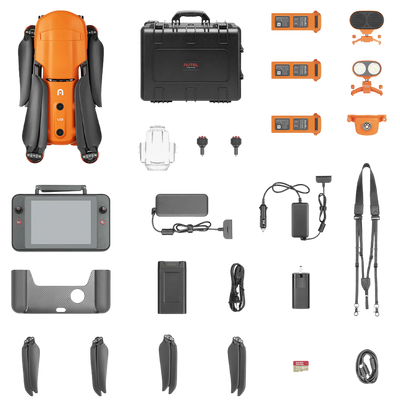
Short version: a thermal drone turns heat you cannot see into data you can act on. It is one of the highest-value tools in inspection work, but only if you pick the right sensor for the defect you need to catch. This guide covers what thermal finds, what the specs actually mean, and how to choose a platform.
What thermal drones are used for
Thermal cameras read the infrared energy a surface gives off, which maps directly to temperature. That makes patterns visible that a normal camera misses. Common jobs include:
- Building and roof inspection: heat loss, missing insulation, and moisture trapped under a membrane that shows up as a temperature difference.
- Solar inspection: faulty cells, bypass diode failures, and hotspots across large arrays, flown quickly from above.
- Electrical and utilities: overheating connections, transformers, and joints on powerlines before they fail.
- Mechanical and industrial: bearings, motors, and process equipment running hotter than they should.
- Public safety: search and rescue, firefighting hotspots, and locating people in low light.
The specs that actually matter
Marketing leads with drone speed and flight time, but for inspection the payload decides your results.
- Sensor resolution. Thermal sensors are far lower resolution than visual cameras. More thermal pixels mean you can fly higher or find smaller defects at the same distance.
- Radiometric data. A radiometric sensor records an actual temperature for every pixel, so you can measure and set alarms, not just see hot and cold.
- Thermal sensitivity (NETD). A lower NETD value means the sensor can separate smaller temperature differences, which matters for subtle moisture and insulation work.
- Lens and zoom. The right lens sets how much detail you capture at a safe standoff distance.
Pair thermal with a visual camera
The best inspection platforms carry a radiometric thermal sensor alongside a high-resolution visual and zoom camera. You use thermal to spot an anomaly, then switch to the visual camera to confirm and document what it is. One without the other slows the job down.
Know the limits
Thermal reads surface temperature only. It does not see through walls, roofs, or water, and it does not see inside a panel or a pipe. It shows you where heat is escaping or building up on a surface, which is usually enough to find the problem, but it is not an x-ray. Reflective surfaces, sun loading, and weather also affect readings, so timing and technique matter as much as the gear.
How to choose
- Define the defect you must catch and the standoff distance you can fly. That sets your minimum sensor resolution.
- Require radiometric output if you need to measure temperatures or set thresholds.
- Choose a platform with a paired visual and zoom camera for confirmation and reporting.
- Match the airframe to your environment: compact for rooftops and facades, larger payload drones for heavy industrial sites.
How Scanixx helps
Tell us what you inspect and we will match a thermal sensor and airframe to the defects you need to find. Browse our thermal and inspection drones or request a quote.
This guide is general information to help you choose. Capabilities vary by sensor and model, so confirm the exact specification for your work before you buy.