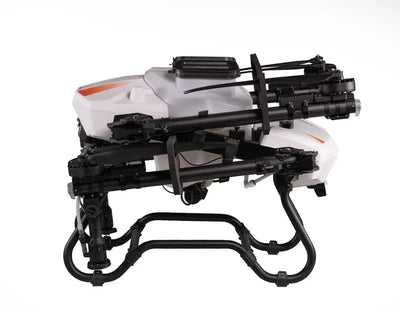
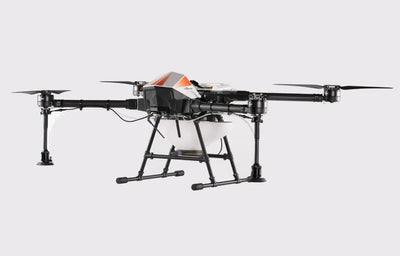
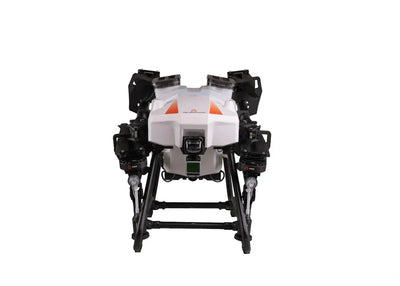
Short version: drones earn their place on a farm in three jobs: spraying, spreading, and scouting. Spraying and spreading put inputs exactly where they are needed, and scouting tells you where that is. Here is how the pieces fit, and the rules that come with spraying.
Spraying and spreading
Spraying drones apply crop protection and liquid fertilizer to fields, orchards, and terrain that ground rigs reach slowly or not at all. With a spreader attachment, the same aircraft broadcasts granules such as seed, fertilizer, and feed, which makes it a year-round tool rather than a seasonal one. The buying decision is mostly about matching tank size and real throughput to your acreage, which we walk through in our agriculture spraying drone guide.
Scouting and crop health
A drone carrying a multispectral or crop-health sensor maps where plants are stressed before it is visible from the ground. That turns blanket spraying into targeted treatment: you treat the zones that need it and skip the ones that do not, which is where the input savings come from. Pairing imaging with a spraying platform closes the loop from finding a problem to fixing it.
The rules that come with spraying
Spraying is regulated more heavily than imaging. In the United States you generally need an FAA Part 107 certificate, a Part 137 agricultural operator certificate to dispense pesticides, and an exemption for aircraft over 55 pounds. Applicators also follow the EPA pesticide label and state rules, and many states require an applicator license. Our Part 107 guide covers the pilot side. Plan these early, because they shape your timeline as much as your equipment does.
How Scanixx helps
Tell us your crops and acreage and we will size a spraying and spreading system, with crop-health imaging if you want to scout first. Browse our agriculture drones and crop-health sensors, or request a quote.
This guide is general information, not legal advice. Spraying and pesticide rules vary by state and change, so verify current FAA, EPA, and state requirements before you operate.