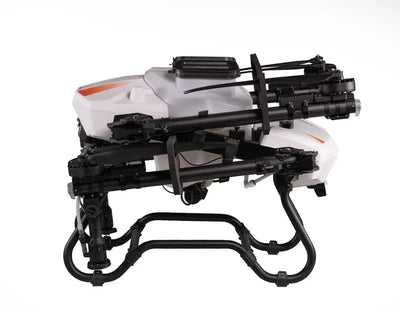
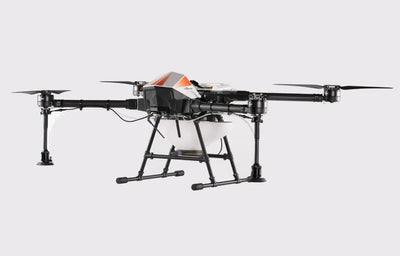
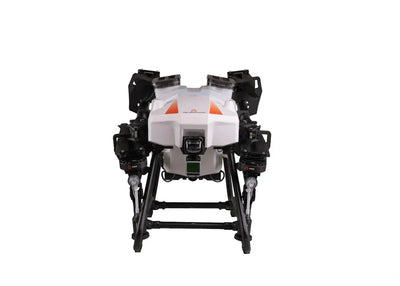
Drone crop spraying is one of the fastest-growing services in agriculture, and the barrier to entry is lower than most people think. A single operator with the right aircraft can spray fields faster, safer, and with less chemical waste than a ground rig, and charge per acre for it. This guide walks through how to start a drone spraying business in 2026: the equipment, the certifications, the economics, and the first steps.
Why drone spraying is a real business
Spray drones apply crop protection and liquid fertilizer exactly where it is needed, reaching wet fields, terraces, orchards, and terrain that ground rigs cover slowly or not at all. Growers pay for speed, precision, and reduced input waste, and many prefer to hire a service rather than buy and staff their own aircraft. That gap is the opportunity.
Step 1: Choose the right spray drone
Match tank size and real throughput to the acreage you plan to serve.
- Starting or specialty crops: a compact platform like the DJI Agras T25 or the ABZ Innovation L10 Pro is efficient for smaller and irregular fields.
- Commercial scale: the DJI Agras T40 and T50 cover up to around 21 hectares per hour with RTK precision and terrain-following radar, and the ABZ L30 and L50 bring European-built CDA droplet technology.
See the platforms in our agriculture drones collection and the European CDA lineup from ABZ Innovation. Budget for batteries, a fast charger, and a generator for remote fields, because power logistics decide how many acres you cover in a day.
Step 2: Get the certifications right
Spraying is regulated more heavily than imaging, so plan this early:
- FAA Part 107 for the remote pilot. See our Part 107 guide.
- FAA Part 137 agricultural aircraft operator certificate to dispense product.
- An exemption for aircraft over 55 pounds, which includes most spray drones.
- EPA and state pesticide rules, including the product label and, in many states, an applicator license.
The paperwork can take longer than buying the drone, so start the applications before your first job.
Step 3: Understand the economics
Operators typically charge per acre, and rates vary by region, crop, and job complexity. The core costs are the aircraft and batteries, chemical and water logistics, transport, insurance, and your time. A realistic plan models how many acres you can spray per day at your local rate, then works back to how quickly the equipment pays for itself. Many operators find that spreading granular product with the same aircraft in the off-season adds a second revenue stream.
Step 4: Insure and protect the business
Clients and landowners will often require proof of liability insurance before you set foot on a field, and applicator work carries real risk. Line up liability cover, and consider hull and payload cover for the aircraft and sensors. Being able to produce a certificate quickly wins contracts.
Step 5: Find your first clients
Start local. Row-crop growers, orchards and vineyards, cover-crop seeding, and hard-to-reach ground are all strong first jobs. A crop-health imaging add-on lets you scout stress and offer targeted spraying, which is an easy upsell and a reason for growers to choose you over a blanket-spray competitor.
Frequently asked questions
What license do I need to spray with a drone in the US?
You generally need an FAA Part 107 certificate to fly commercially and an FAA Part 137 certificate to dispense product, plus an exemption for aircraft over 55 pounds and compliance with EPA and state pesticide rules. Requirements vary by state.
How much does a spray drone cost to start?
A compact platform with batteries and charging is the entry point, while commercial T40 and T50 class systems cost more but cover far more acreage per hour. Match the aircraft to the acreage you can realistically book.
How many acres can a spray drone cover in a day?
Throughput depends on the platform, tank size, battery logistics, and field conditions. Commercial platforms can reach around 21 hectares per hour in ideal conditions, though real-world daily output is lower once you account for mixing, transport, and charging.
Is drone spraying profitable?
It can be, because you charge per acre and one operator covers ground quickly with low chemical waste. Profitability depends on your local rate, utilization, and how well you manage power and logistics.
Ready to build your spraying operation?
We help new operators match a spray platform to their acreage and certification plan, from the DJI Agras series to European ABZ Innovation CDA drones. Browse the agriculture drones collection, read our spraying drone buyer's guide, or email info@scanixx.com and we will spec a system with you.