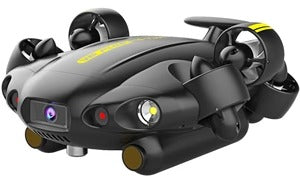
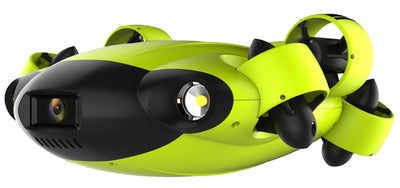
Short version: an underwater ROV is judged by five things: how deep it can go, how far its tether reaches, how long it runs, how clearly it sees, and how steadily it holds position in current. Match those to your work and the rest is detail. As a bonus, ROVs sit outside the rules that are squeezing the aerial market.
Why ROVs are a stable choice in 2026
Underwater ROVs are not classified as unmanned aircraft, so the FCC Covered List and the import limits now affecting foreign-made drones do not apply to them. They remain widely available in the US with no equivalent restriction. If you want capability you can count on buying again next year, underwater is a dependable lane.
What an ROV is used for
- Inspection: hulls, piers, dams, locks, pipelines, tanks, and intakes without putting a diver in the water.
- Search and recovery: locating and retrieving objects in conditions that are unsafe or impractical for divers.
- Aquaculture: checking nets, moorings, and stock on fish farms.
- Survey and research: documenting structures, habitats, and the seabed.
The specs that actually matter
- Depth rating. The maximum depth the ROV is built to work at. Choose for your deepest realistic job with margin to spare, not the average.
- Tether length. The tether carries power and data and is the real limit on how deep and how far you can reach. It also adds drag in current, so match its length to the job rather than buying the longest available by default.
- Runtime. How long the ROV works on a charge. For a full day of inspection, plan spare batteries and charging the same way you would for an aerial fleet.
- Thrusters and stability. The number and layout of thrusters decide how maneuverable the ROV is and how well it holds station in flow. More thrust and active stabilization mean steadier video and far less fighting the current.
- Camera and lighting. Water absorbs light fast, so onboard lighting matters as much as camera resolution and low-light performance. Look for strong, adjustable lights and a stabilized image.
- Payload options. Grippers and manipulator arms for recovery, and sonar for navigating and finding objects when visibility is poor.
Visibility is the real-world variable
In clear water a good camera does the job. In murky harbors, rivers, and stirred-up sediment, cameras alone struggle no matter how sharp they are. If you regularly work in low visibility, sonar is not a luxury, it is what lets you keep working when the water turns brown.
Portability and deployment
Weight, case size, and how many people it takes to launch and recover all shape how often the ROV actually gets used. A compact system one person can carry to a dock gets deployed far more than a heavy rig that needs a crew, so be honest about your typical site.
How to choose
- Set your maximum working depth, then add margin and pick a depth rating above it.
- Match tether length to that depth plus the horizontal reach you need.
- Add sonar if you work in low-visibility water.
- Choose thruster count and stabilization for the current you expect.
- Plan batteries, lighting, and any manipulator payload as part of the system, not extras.
How Scanixx helps
Tell us your depth, water conditions, and task and we will match an ROV and payload to it. Browse our underwater ROVs or request a quote.
This guide is general information to help you choose. Capabilities vary by model and configuration, so confirm depth rating, tether, and payload support for your exact use before you buy.