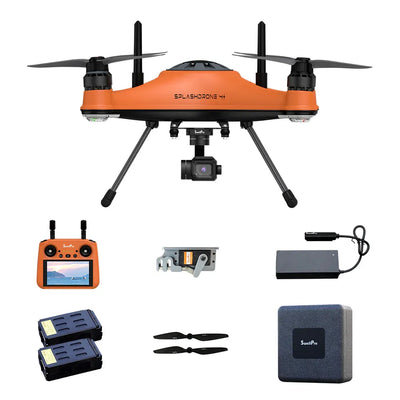
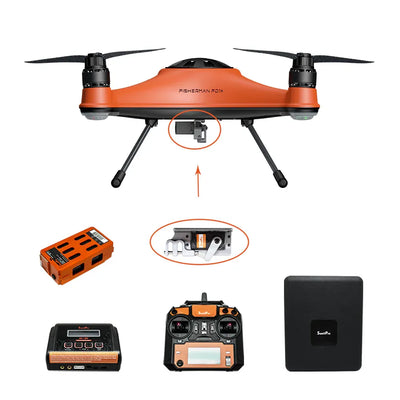
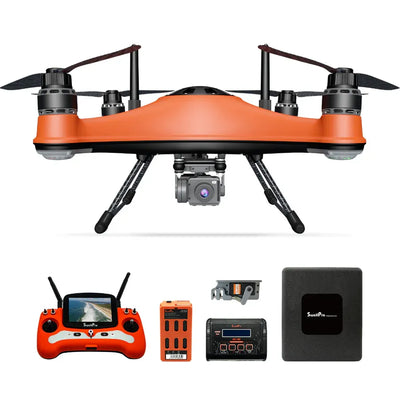
Short version: a fishing drone has to survive saltwater, carry a baited line and drop it exactly where you want, and stay steady in coastal wind. Choose for waterproofing, payload and release, range, and stability. And check your local rules before you fly, because drone fishing is not allowed everywhere.
What a fishing drone does
A fishing drone carries your bait and line out past the breakers and drops it on a spot you could never reach by casting, often after scouting for fish, bait balls, and structure from above. Done well, it puts your hook exactly where the fish are. Done with the wrong gear, it ends up in the surf.
The specs that actually matter
- Waterproofing and corrosion resistance. This is the one that separates a fishing drone from a camera drone. Saltwater is brutal, so look for a genuinely waterproof airframe that can take spray and ideally land on the water, not just a splash-resistant one.
- Payload capacity and release. The drone needs enough lift to carry your rig comfortably, and a reliable remote release that holds the line until you trigger it and never drops early. The release mechanism is as important as the lift.
- Range and signal. You are flying out over open water with no cover, so you want range well beyond the surf line and a signal you can trust at distance.
- Wind resistance and stability. The coast is windy by default. A stable platform that holds position lets you place the drop accurately instead of fighting gusts.
- Camera. A good downward view helps you find fish and confirm the drop landed where you intended.
- Battery and floatation. Enough flight time for repeated runs, and the ability to float or land on water as a safety net if a battery runs low offshore.
Saltwater care is part of the deal
Even a waterproof drone lasts longer if you treat it well. Rinse with fresh water after saltwater sessions, dry it properly, and keep an eye on connectors and moving parts. A few minutes of maintenance after each trip saves an expensive failure later.
Know the rules before you fly
Drone fishing is restricted or banned in some places, and the rules vary by country, state, beach, and fishery. Some areas allow it freely, others prohibit dropping bait by drone or flying over certain waters and wildlife. On top of that, the usual drone rules still apply: registration, Remote ID where required, and an FAA Part 107 certificate if you are operating commercially. Check the local fishing and wildlife regulations and the airspace rules for your spot before you launch.
How to choose
- Confirm drone fishing is allowed where you fish before anything else.
- Start with a truly waterproof, corrosion-resistant airframe.
- Match payload lift to your rig and demand a dependable remote release.
- Choose range and wind resistance for open-water, coastal conditions.
- Plan batteries and floatation for repeated drops with a safety margin.
How Scanixx helps
Tell us where and how you fish and we will point you to a drone built to survive it. Browse our fishing drones or request a quote.
This guide is general information to help you choose. Rules for drone fishing and drone flight vary widely and change, so verify the current local fishing, wildlife, and airspace regulations for your location before you operate.