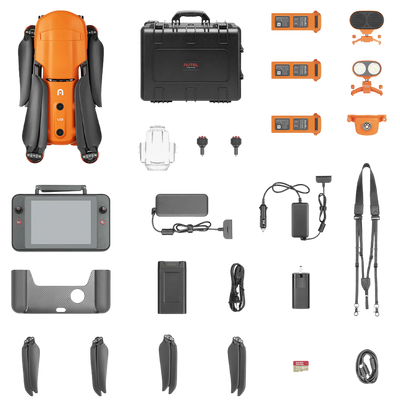
Short answer: there is no ban on owning or flying DJI or Autel drones in the United States. Since late December 2025, DJI and Autel, along with essentially all foreign-made drones, were added to the FCC Covered List, which blocks brand-new models from entering the US market. The aircraft already here remain legal to buy, own, and fly. This guide explains exactly what changed, who is affected, and what to do next.
Is there really a DJI ban?
The word ban is doing a lot of work in the headlines. What actually happened is narrower and more specific. On December 22 and 23, 2025, the Federal Communications Commission added foreign-produced uncrewed aircraft systems (UAS) and certain UAS critical components to its Covered List. DJI and Autel are named in Section 1709 of the FY2025 National Defense Authorization Act, and the broader action swept in nearly all foreign-made drones at the same time.
Being on the Covered List means the equipment cannot receive new FCC equipment authorizations. Every wireless device sold in the US needs that authorization to transmit legally, so blocking it stops new models at the border. It does not reach back and disable the drones already in service.
What is still legal
- Owning and flying. If you already own a DJI or Autel drone, you can keep flying it under existing FAA rules. Nothing about the Covered List grounds your aircraft.
- Buying existing models. Retailers can keep selling models that received FCC authorization before the listing, plus new units and replacement parts for those approved models.
- No remote shutdown. There is no legal or technical mechanism to remotely disable drones in the field. Flight control is local to the aircraft.
In other words, this is a restriction on what enters the market next, not a recall of what is already flying.
What actually changed
The real shift is the closed pipeline for new foreign models. Because no new DJI or Autel aircraft can clear FCC authorization, the supply of genuine, US-market units is now finite. As current models sell through, they are not being replaced by newer generations from the same brands. For buyers, that turns a routine purchase into a question of timing: genuine stock of the model you want is limited, and it tightens over time.
Who is actually restricted
The sharpest edge of the rules falls on government procurement. Under NDAA Section 1709, federal agencies and federally funded programs are restricted from buying DJI and Autel. If your budget comes from a federal grant or contract, you generally cannot procure these brands, and you will need an NDAA-compliant platform instead.
Private companies and individual commercial operators are in a very different position. The Covered List does not stop you from buying or flying authorized DJI and Autel hardware. The decision for private buyers is practical, not legal: secure genuine units while they are available.
What about Blue UAS and compliant options?
For government and federally funded work, NDAA-compliant platforms are the path forward. In January 2026 the FCC issued an exemption that removed Blue UAS and qualified domestic products from the Covered List, alongside a conditional waiver process for other non-US drones. Vetted lines such as Sentera, Freefly, and ABZ cover mapping, thermal, and spraying work without the procurement risk. You can browse compliant options in our NDAA-compliant collection.
Do the FAA rules change too?
No. The Covered List is an FCC equipment-authorization matter. Your flight obligations are unchanged: commercial operations still require an FAA Part 107 Remote Pilot Certificate, aircraft registration, and Remote ID broadcast where applicable. Recreational flyers continue under the FAA recreational rules and the TRUST test.
What to do now
- Private commercial and recreational pilots: if a specific DJI or Autel model fits your work, buy genuine, US-market stock while it lasts, and keep spare parts on hand for the platforms you depend on.
- Government and federally funded teams: move planning toward NDAA-compliant platforms now, and confirm your funding source before you commit to a brand.
- Underwater work: underwater ROVs are not classified as aircraft, so they sit outside the Covered List entirely and remain fully available. They are the most supply-stable side of the catalog.
How Scanixx fits in
We are a US-focused specialist in genuine enterprise drones and ROVs. Every unit we ship is genuine, brand new, US-market hardware, not pre-activated, with a written warranty and a named human you can reach after the sale. As the pipeline tightens, the two things that matter are simple: who can still source genuine stock, and who answers when you need help. If you are weighing a purchase, request a quote and we will confirm honestly what is available.
This guide reflects the situation as of 2026 and is for general information, not legal advice. Rules and waivers continue to evolve. For the authoritative status, see the FCC Covered List.