Scaffolding a six-storey building facade takes days to install and costs thousands before a single square metre is cleaned. A boom lift requires a certified operator, traffic management on the street below, and a weather window wide enough to justify the mobilisation cost. Rope access teams are skilled and fast but expensive, limited to what a person can safely reach, and unavailable for many facility managers on a routine maintenance schedule.
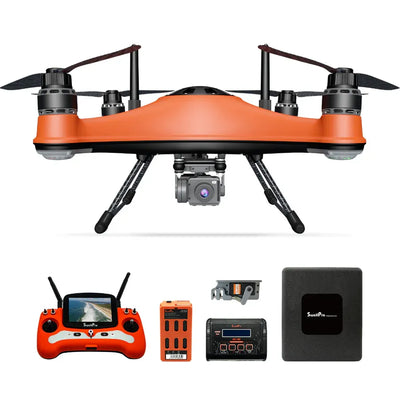
The ABZ Innovation C10 solves all three problems at once. It is a professional high-pressure cleaning drone that supplies water through a ground-based pressure unit via a hose to a nozzle mounted on the drone. The operator controls position from the ground. The drone delivers 180 bar of pressure at 15 litres per minute to heights of up to 60 metres. No workers at height. No scaffolding. No crane.
At Scanixx, we carry the full ABZ Innovation C10 lineup including the drone, the 30-metre hose, and the 60-metre hose extension. This guide covers exactly how the system works, where it performs best, and what operators and facility managers need to know before adding it to their workflow.
How the ABZ Innovation C10 Actually Works
The C10 is not a self-contained cleaning machine. It is a positioning system for a high-pressure nozzle. Understanding that distinction is important for setting accurate expectations about what the system does and does not do.
On the ground, a standard professional high-pressure cleaning unit supplies water at up to 180 bar. That water travels through a flexible hose, available in 30-metre and 60-metre lengths, that runs from the ground unit up to the drone. The drone carries a quick-attach bayonet nozzle at the end of the hose. The operator flies the drone to the target surface and controls the cleaning pattern using the remote controller while the pressure system on the ground does the actual cleaning work.
The radar-based distance keeping system is what makes this practical on building facades. On a flat wall, the C10 uses its forward radar to automatically maintain a consistent standoff distance from the surface, typically 1 to 2 metres, while the operator controls horizontal movement. This produces consistent, repeatable cleaning passes without requiring the pilot to manually manage depth. On irregular surfaces, complex facades with protrusions, or sloped roofs, the operator switches to manual mode and controls position directly.
The nozzle system is modular. ABZ offers three nozzle options: a 3-way nozzle with a 0-degree pencil jet for concentrated cleaning, a 25-degree flat spray for standard facade work, and a 40-degree foaming spray for surfaces requiring detergent application. A foam injector and an eco-booster nozzle are available for operators who want to reduce water consumption on large surfaces. Karcher accessories are also compatible, which matters for operators who already run professional ground-based cleaning equipment and want to use familiar tooling on the C10.
Key Specifications
- Maximum Operating Height: 60 metres (197 feet)
- Pressure: 50 to 180 bar, adjustable
- Flow Rate: 15 litres per minute
- Hose Options: 30-metre (95 ft) or 60-metre (190 ft)
- Distance Keeping: radar-based, automatic on flat surfaces
- Nozzle System: bayonet quick-attach, multiple nozzle types available
- Maximum Speed: 20 m/s
- Maximum Wind Tolerance: 10 m/s
- Airframe: ABZ M12 heavy-lift platform
- Certification: EASA C5 class, CE certified
- Cleaning Medium: water or biodegradable detergents
Where the ABZ C10 Performs Best
Building Facades
Flat to moderately complex building facades are the primary use case the C10 was designed for. Commercial office buildings, residential apartment blocks, industrial facilities, and shopping centres all accumulate dirt, algae, and pollution staining on facades that traditional cleaning methods address slowly and expensively. The C10 covers large uniform wall sections efficiently using the automatic radar distance-keeping mode, which lets the operator focus on the cleaning pattern rather than managing proximity to the wall.
In a documented use case from ABZ Innovation, a factory building facade that had not been cleaned in two years was treated in a single day. The same job using scaffolding would have taken four to eight weeks to schedule and several days to complete once the scaffolding was in place.
Rooftops
Moss, algae, and debris accumulation on rooftops is a maintenance problem that most facility managers address infrequently because access is difficult and the load-bearing capacity of old roof surfaces is uncertain. The C10 guided most of its cleaning hose onto a test roof in ABZ's own published case study by flying the hose up and over the roof edge, then cleaning downward using a 40-degree nozzle in a top-down scanning pattern. The roof surface was never loaded with the weight of a cleaner or equipment.
Solar Panel Arrays
Soiling on solar panels reduces output by 5 to 20 percent depending on accumulation and location. Ground-mounted arrays are accessible with standard cleaning equipment but still require significant manual labour at scale. Roof-mounted arrays, elevated arrays on commercial buildings, and ground-mounted arrays with restricted vehicle access are all situations where the C10 provides practical value. The adjustable nozzle pressure is important here: 180 bar would damage photovoltaic cells and glass surfaces, so operators working on solar panels use lower pressure settings and appropriate nozzle types to clean effectively without causing damage.
Glass Curtain Walls
Glass curtain walls on modern commercial buildings require regular cleaning for aesthetic and functional reasons. Traditional methods use window cleaning cradles suspended from the roof, rope access technicians, or boom lifts. All require significant advance planning, specialist crews, and access to the roof or the street perimeter. The C10 reaches glass curtain walls from the ground without any of that infrastructure, which reduces both scheduling lead time and cost per clean.
Industrial Structures
Silos, warehouse exteriors, industrial plant buildings, water towers, and factory structures accumulate contamination at height that is difficult and risky to address with conventional methods. The C10's 60-metre operational height covers the majority of single-story and low-rise industrial structures without rope access or crane hire. For operators serving industrial cleaning clients, the ability to quote and complete facade and roof cleaning jobs at height without specialist access equipment changes the economics of the service significantly.
Wind Turbine Blades
Contamination and insect accumulation on wind turbine blade leading edges reduces aerodynamic efficiency and can reduce energy output by up to 5 percent on affected turbines. Traditional blade cleaning requires rope access specialists or crane-mounted platforms, both of which are expensive and weather-dependent. The C10 reaches blade surfaces from the ground using the 60-metre hose configuration. This application is still being developed by operators and results depend heavily on site conditions and blade geometry, but it represents a growing use case for the platform.
The Business Case: What Drone Cleaning Actually Costs and Saves
The cost argument for the C10 comes from two directions: eliminating access equipment costs and completing jobs faster.
Scaffolding a standard 5-storey commercial building costs between $8,000 and $25,000 depending on size, access complexity, and duration. That cost is paid before any cleaning happens. A boom lift or cherry picker adds daily hire costs of $800 to $2,000 plus a certified operator. Rope access teams charge $400 to $800 per person per day for teams that typically run three to five people.
The C10 eliminates the scaffolding cost entirely. The drone and pressure equipment can be mobilised by a two-person team. Setup takes under an hour. A facade that would take a scaffolding crew two days to reach and clean can be completed in a single shift with the C10. For facility managers running regular maintenance programs, the cumulative saving over multiple clean cycles is significant.
For operators building a drone cleaning service, the C10 opens client segments that are currently served expensively or infrequently: property management companies, building owners with regular maintenance requirements, solar farm operators, and industrial facility managers. The ability to provide a competitive quote for facade and rooftop cleaning without access equipment overhead changes the pricing conversation with these clients.
What Operators Need Before They Start
The C10 requires a few things that operators should plan for before their first commercial job.
FAA Part 107 certification. Commercial drone operation in the US requires a Part 107 Remote Pilot Certificate. The C10 is a commercial drone. Every operator who flies it for payment needs to be Part 107 certified.
A ground-based pressure unit. The C10 does not include the pressure source. A professional high-pressure cleaning unit capable of sustained output at 150 to 180 bar is required. Operators who already run a pressure washing business will typically already have this equipment. New entrants to the cleaning market need to budget for it.
Water supply logistics. At 15 litres per minute, a standard job covering a 200-square-metre facade runs for 30 to 60 minutes of active cleaning time. That is 450 to 900 litres of water. A water tank on a trailer or a connection to a building water supply is needed for most jobs.
Site survey. Before flying on a building facade, the operator needs to assess the clearances around the structure, identify overhead utilities and obstacles, confirm the surface material and pressure tolerance, and establish a safe operating zone on the ground below. The C10's hose creates a physical connection between the drone and the ground that limits the drone's movement radius and must be accounted for in the site plan.
Liability insurance. Commercial drone operators need liability insurance covering drone operations. For cleaning work on client buildings, the policy should cover property damage, including damage caused by high-pressure water to surfaces, windows, and fittings. Confirm coverage limits with your insurer before the first commercial job.
ABZ C10 Products Available at Scanixx
Scanixx carries the full ABZ Innovation C10 lineup for the US market with free shipping on orders over $599.
- ABZ Innovation C10 Cleaning Drone: the base drone unit on the M12 airframe with radar distance keeping and bayonet nozzle system. Shop the C10
- ABZ Innovation C10 Ready-to-Fly Kit: the complete system configured for immediate deployment. Shop the RTF Kit
- ABZ C10 30-metre Hose (95 ft): the standard hose for buildings up to approximately 30 metres height. Shop the 30m Hose
- ABZ C10 60-metre Hose (190 ft): the extended hose for structures up to 60 metres. Shop the 60m Hose
Frequently Asked Questions About the ABZ C10 Cleaning Drone
What surfaces can the ABZ C10 clean?
The C10 is suitable for building facades in concrete, brick, render, and cladding materials, glass curtain walls, flat and sloped rooftops, solar panel arrays, warehouse and factory exteriors, silos and storage tanks, and certain industrial structures. Operators should assess the pressure tolerance of the target surface before cleaning and adjust the pressure setting accordingly. Delicate surfaces including photovoltaic cells and specialist coatings require lower pressure settings and appropriate nozzle selection.
Does the C10 include the pressure unit?
No. The C10 is the drone and hose system. A separate ground-based high-pressure cleaning unit supplying water at up to 180 bar is required. Operators who already run professional cleaning businesses typically have compatible equipment. The C10 works with standard professional pressure systems, and Karcher accessories are compatible with the nozzle system.
How high can the ABZ C10 reach?
The standard configuration with the 30-metre hose reaches surfaces up to approximately 30 metres (98 feet) in height. With the 60-metre hose, the C10 reaches up to 60 metres (197 feet). This covers the majority of commercial and low-rise industrial structures without crane hire or scaffolding.
Can the C10 clean solar panels without damaging them?
Yes, with appropriate pressure settings and nozzle selection. Standard photovoltaic panel cleaning requires lower pressure than facade cleaning to avoid damaging the glass or frame seals. Operators should confirm the manufacturer's recommended cleaning pressure for the specific panel type and use the adjustable pressure system on the ground unit to set an appropriate level. The C10's adjustable pressure range of 50 to 180 bar covers the full range from gentle panel cleaning to heavy facade cleaning.
Do I need a licence to operate the ABZ C10?
Yes. Flying the C10 commercially requires an FAA Part 107 Remote Pilot Certificate in the United States. The C10 is a professional drone and all commercial drone operations require Part 107 certification. The EASA C5 certification applies to European operations under EU UAS regulations.
How many people does a C10 cleaning operation require?
A minimum two-person team is recommended for most jobs: one pilot controlling the drone and one ground operator managing the pressure unit, hose feed, and water supply. On larger jobs or complex facades, a third person handling hose management and site safety is advisable.
Ready to Add Drone Cleaning to Your Operation?
Whether you are a facility manager looking for a more efficient way to maintain your building portfolio or a cleaning contractor building a differentiated service offering, the ABZ Innovation C10 changes what is possible without workers at height. Scanixx carries the full C10 lineup with free US shipping on orders over $599. Contact us at info@scanixx.com for configuration advice and pricing on complete cleaning systems.