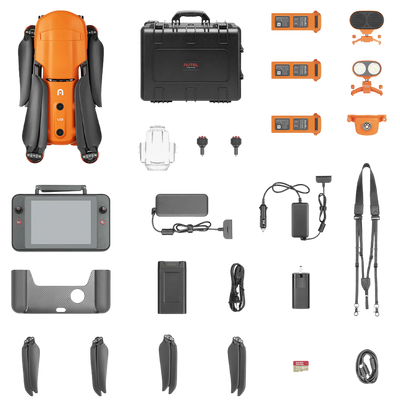
Two drones. Both carry thermal cameras, laser rangefinders, and 160x+ zoom. Both fly 42 minutes on a charge. Both cost around $8,000 to $10,000 in a professional configuration. On paper, the DJI Matrice 4T and the Autel EVO MAX 4T V2 look like they solve the same problem. In practice, they solve it differently, and the differences matter when you are choosing a platform your team will rely on for the next three to five years.
This guide compares both platforms spec by spec, covers where each one genuinely leads, and explains which operation should choose which drone. No filler, no spec-dumping for its own sake. Just the information that actually changes the decision.
Why This Comparison Matters in 2026
The enterprise drone market changed significantly in December 2025. DJI and Autel were both added to the FCC Covered List, blocking new equipment authorizations for federal agencies and federally funded programs. That shift means the compliance question is now part of every serious enterprise drone purchase discussion, not just a footnote for government buyers.
For private commercial operators, both platforms remain fully legal to purchase and fly. For government agencies, public safety departments, and contractors working on federally funded programs, NDAA compliance is a hard requirement. Both the Matrice 4T and the EVO MAX 4T V2 are NDAA-compliant. That baseline is covered. The choice between them comes down to operational priorities.
Spec-by-Spec Comparison
Thermal Camera
Both platforms carry a 640x512 radiometric thermal sensor. This is the professional standard for inspection and SAR work, and neither platform cuts corners here. The DJI Matrice 4T uses a FLIR Boson+ core with a sensitivity rating under 30 mK, meaning it detects temperature differences as small as 0.03 degrees Celsius. The Autel EVO MAX 4T V2 thermal sensor has a similar resolution but a 9.1mm focal length with 16x digital zoom on the thermal feed itself, adding flexibility when imaging targets at varying distances.
For inspection work where temperature measurement accuracy matters for compliance reports, the Matrice 4T's FLIR Boson+ core has the stronger documented pedigree. For SAR and surveillance work where the thermal feed is primarily used for detection rather than measurement, both perform comparably in real-world conditions.
Optical Zoom
This is where the platforms diverge meaningfully. The DJI Matrice 4T carries a 56x hybrid zoom on its tele camera. The Autel EVO MAX 4T V2 carries 10x optical zoom with 160x maximum hybrid zoom. The Autel wins on maximum zoom reach, but hybrid zoom at extreme ratios introduces image quality degradation. In practical inspection workflows, operators using the Autel typically work in the 10x to 40x range where image quality is clean. The DJI's 56x hybrid is more conservative but more consistent across its zoom range.
Laser Rangefinder
The DJI Matrice 4T's laser rangefinder reaches 1,800 metres with one-tap GPS coordinate acquisition. The Autel EVO MAX 4T V2 reaches 1.14 km (3,737 feet). For most inspection and SAR applications, the Autel's rangefinder covers the operational distance. For long-range surveillance or infrastructure inspection at extended standoff distances, the DJI's 1,800-metre reach is the stronger specification.
Obstacle Avoidance
The Autel EVO MAX 4T V2 leads significantly here. It combines binocular vision systems with millimeter-wave radar for 720-degree obstacle avoidance that detects objects as small as 0.5 inches and functions in low-light and rainy conditions where camera-based systems degrade. The DJI Matrice 4T uses APAS 5.0 omnidirectional sensing, which is excellent, but does not include radar-based detection. For flights in complex urban environments, near power lines, or in conditions where camera-based sensing is compromised, the Autel's radar adds meaningful operational safety margin.
GPS-Denied Flight
The Autel EVO MAX 4T V2 includes visual inertial navigation that allows stable flight in environments without GPS signal. This matters for operations near large metal structures, inside parking garages, or in areas with GPS jamming or spoofing. The DJI Matrice 4T does not offer the same GPS-denied capability. For operators who routinely fly in RF-complex environments or near critical infrastructure where GPS reliability is uncertain, this is a meaningful differentiator in Autel's favour.
A-Mesh Networking
The Autel EVO MAX 4T V2 includes A-Mesh 1.0, which connects multiple drones and ground terminals in a self-organizing mesh network without centralised infrastructure. For multi-drone operations, large-scale searches, or operations requiring coordinated coverage of wide areas, A-Mesh allows aircraft to share feeds and positioning data across the network. The DJI Matrice 4T integrates with DJI FlightHub 2 for fleet management, which is excellent software but requires cloud connectivity. Autel's A-Mesh operates offline without a data connection to external servers.
Weather Resistance
The DJI Matrice 4T carries an IP54 rating. The Autel EVO MAX 4T V2 carries an IP43 rating. In practice, both handle light rain and coastal spray. For operations in sustained rain or heavily dusty industrial environments, the Matrice 4T's IP54 rating provides a meaningful additional margin. Operators in Pacific Northwest or Gulf Coast environments where weather is unpredictable should note this difference.
Dock Compatibility
The DJI Matrice 4T is compatible with DJI Dock 2 for automated, operator-free missions on a schedule. If your operation includes a fixed asset that requires regular automated inspection without deploying a pilot each time, the dock-compatible variant of the Matrice 4T (the Matrice 4TD) is the only serious option from either manufacturer in this price range. Autel does not offer a dock-compatible system comparable to DJI Dock 2.
NDAA Compliance
Both platforms are NDAA-compliant. Neither is currently on the DCMA Blue UAS Cleared List. For programmes that specifically require Blue UAS certification rather than NDAA compliance, neither platform qualifies and the Parrot ANAFI USA GOV Edition or Skydio X10 are the alternatives to evaluate.
Price
The Autel EVO MAX 4T V2 is typically priced lower than the DJI Matrice 4T in comparable configurations by $1,000 to $2,000. For budget-constrained programmes where both platforms meet the mission requirements, this difference is meaningful at scale.
Which Operation Should Choose the DJI Matrice 4T
Choose the DJI Matrice 4T if your operation involves:
- Inspection work where temperature measurement accuracy and a FLIR Boson+ core matters for compliance documentation
- Long-range surveillance or infrastructure inspection at standoff distances above 1 km where the 1,800-metre rangefinder is operational rather than theoretical
- Automated dock-based monitoring programs where DJI Dock 2 integration is part of the workflow
- Operations in sustained rain or dusty environments where IP54 versus IP43 is a real operational factor
- Teams already using DJI FlightHub 2 or DJI enterprise software who want a consistent ecosystem
Shop the DJI Matrice 4T at Scanixx
Which Operation Should Choose the Autel EVO MAX 4T V2
Choose the Autel EVO MAX 4T V2 if your operation involves:
- NDAA compliance is required and you want the most capable NDAA-compliant thermal platform with the best price-to-performance ratio
- Operations near power lines, large metal structures, or in GPS-degraded environments where radar-based obstacle avoidance and visual inertial navigation are operationally important
- Multi-drone coordination across sectors where A-Mesh offline networking provides value without relying on cloud infrastructure
- Cold-weather operations where the minus 20 degree Celsius operating floor matters (versus minus 10 for the Matrice 4T)
- Budget sensitivity where the $1,000 to $2,000 price difference at equivalent configurations is a real procurement factor
Shop the Autel EVO MAX 4T V2 at Scanixx
The Honest Summary
The DJI Matrice 4T is the stronger choice for organisations that want the deepest ecosystem integration, automated dock-based operations, and the most weather-resistant body in this price class. The Autel EVO MAX 4T V2 is the stronger choice for organisations that need NDAA compliance, operate in GPS-challenged environments, run multi-drone programmes, or need the best cold-weather performance at a slightly lower price point.
Neither platform is universally better. The right answer depends on where you fly, what you inspect, how your team coordinates, and what your procurement rules require. Both are in stock at Scanixx with free US shipping on orders over $599. Contact us at info@scanixx.com if you want to talk through which configuration fits your specific programme.
Browse all thermal and inspection drones at Scanixx
Frequently Asked Questions
Is the DJI Matrice 4T NDAA compliant?
Yes. The DJI Matrice 4T is NDAA-compliant. It is not on the DCMA Blue UAS Cleared List. For programmes that require Blue UAS certification specifically, the Matrice 4T does not qualify.
Is the Autel EVO MAX 4T V2 NDAA compliant?
Yes. The Autel EVO MAX 4T V2 is NDAA-compliant. Like the Matrice 4T, it is not currently on the DCMA Blue UAS Cleared List.
Which has better thermal imaging, DJI Matrice 4T or Autel EVO MAX 4T?
Both carry 640x512 radiometric thermal sensors. The Matrice 4T uses a FLIR Boson+ core with sub-30 mK sensitivity, which has a stronger track record in inspection applications requiring precise temperature measurement. For detection-focused SAR and surveillance work, both perform comparably in real-world conditions.
Can the Autel EVO MAX 4T V2 fly without GPS?
Yes. The EVO MAX 4T V2 includes visual inertial navigation that allows stable flight in GPS-denied environments. The DJI Matrice 4T does not offer the same capability.
Which drone has better zoom, DJI Matrice 4T or Autel EVO MAX 4T?
The Autel EVO MAX 4T V2 reaches 160x maximum hybrid zoom. The DJI Matrice 4T reaches 56x hybrid zoom. Autel has the higher ceiling, but practical image quality at extreme hybrid zoom ratios degrades on both platforms. For inspection work, both are typically used well within their optical zoom range.